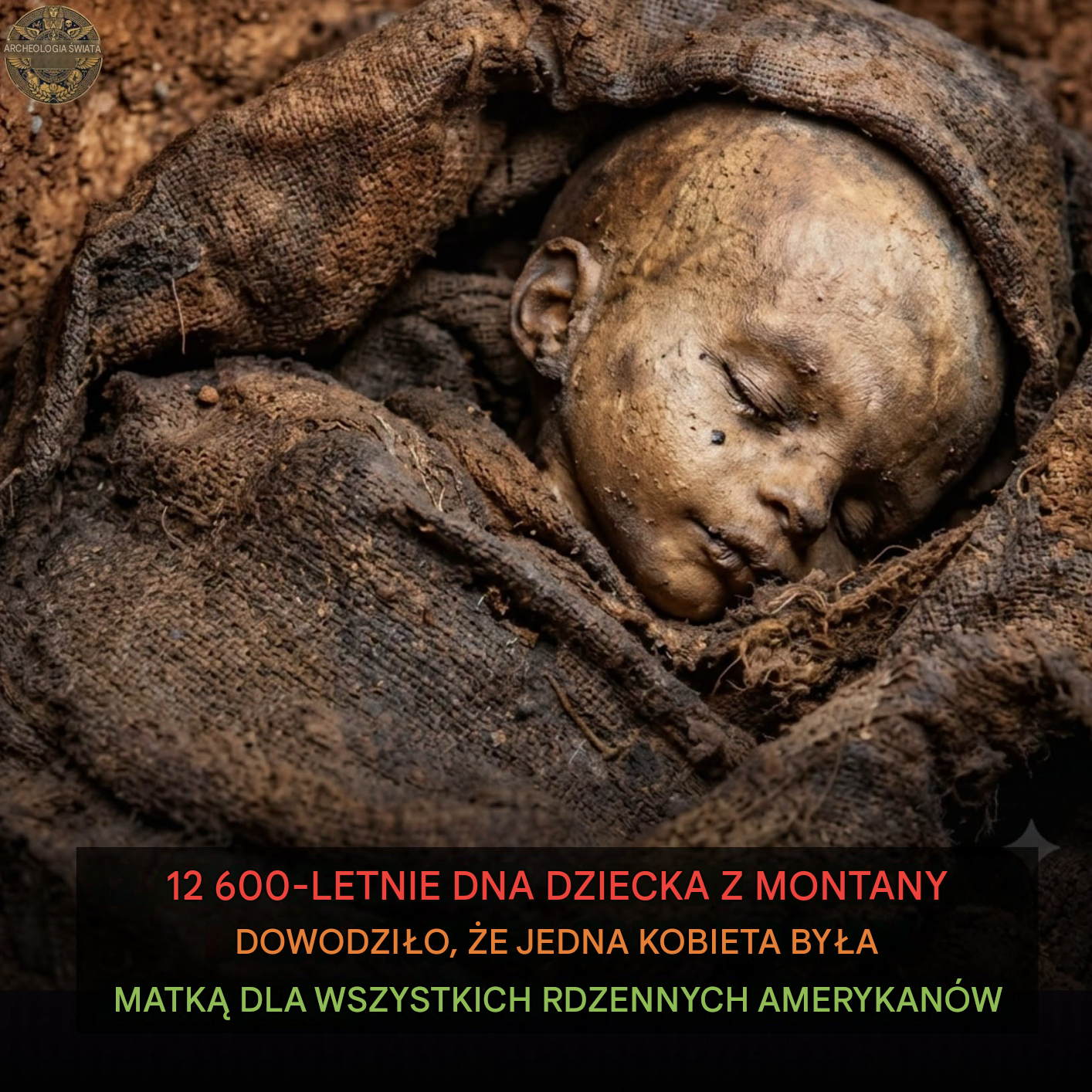
Anzick-1, a 1-to-2-year-old boy buried roughly 12,600 years ago near Wilsall, Montana, alongside over 100 stone and antler tools dusted in red ochre. When geneticists sequenced his genome in 2014, it became the oldest ancient human genome ever recovered in North America and the only one directly tied to the prehistoric Clovis culture.
In the years since that landmark discovery, Anzick-1 has become one of the most important figures in human evolutionary history. Yet, as often happens when complex population genetics collides with social media algorithms, the real scientific story has frequently been twisted into catchy but inaccurate viral headlines—most notably the claim that geneticists proved "one single woman mothered all Native Americans."
To understand why that claim is false—and why the actual truth is far more extraordinary—we have to look closely at what was found in that Montana hillside, what modern DNA sequencing actually revealed, and how the first peoples of the Americas truly arrived.
Here is what the DNA actually proved versus where the viral headline goes wrong:
Part 1: What the DNA Actually Proved
Direct Asian and Siberian Roots
Anzick-1’s genome confirmed that the Clovis people were not European migrants—definitively refuting the fringe "Solutrean hypothesis"—but descended directly from ancient populations that migrated from Siberia across Beringia into the Americas.
For decades before 2014, a small but vocal group of archaeologists promoted the Solutrean hypothesis. This theory argued that the distinctive, finely crafted stone spear points of the Clovis culture looked suspiciously similar to stone tools made by the Solutrean people of Ice Age France and Spain roughly 20,000 years ago. Proponents speculated that Ice Age Europeans might have sailed or walked along the frozen edge of the North Atlantic ice sheet to reach North America, becoming the true ancestors of the Clovis people before being wiped out or absorbed by later arrivals from Asia.
Anzick-1’s DNA put that theory to rest permanently. When an international team of geneticists led by Eske Willerslev at the University of Copenhagen sequenced the toddler's nuclear genome, they found zero evidence of direct Ice Age Western European ancestry. Instead, Anzick-1’s genetic makeup matched the exact ancestral signature seen in ancient Siberia.
Specifically, geneticists found that Anzick-1 carried the same dual ancestral blend found in all Indigenous peoples of the Americas: roughly two-thirds of his ancestry came from an ancient East Asian lineage, while roughly one-third came from a population known as the Ancient North Eurasians (ANE)—a group best represented by the 24,000-year-old remains of a boy found at the Mal'ta site near Lake Baikal in south-central Siberia. Thousands of years before anyone set foot in Montana, these two Siberian populations met, mixed, and formed the ancestral gene pool that crossed the Bering land bridge into the New World.
Please click on the next page to continue reading 👇