A Shared Founding Population
His nuclear DNA showed that he belonged to a founding population directly ancestral to nearly all living Native Americans—especially Indigenous peoples in Central and South America, who share a closer genetic affinity to him than some northern North American groups.
This discovery settled one of the most contentious debates in American archaeology and anthropology. Throughout the 20th century, some researchers argued that the earliest inhabitants of the Americas—often referred to as "Paleoindians"—were biologically distinct from modern Native Americans, suggesting they had either gone extinct or been replaced by subsequent waves of migrants from Asia.
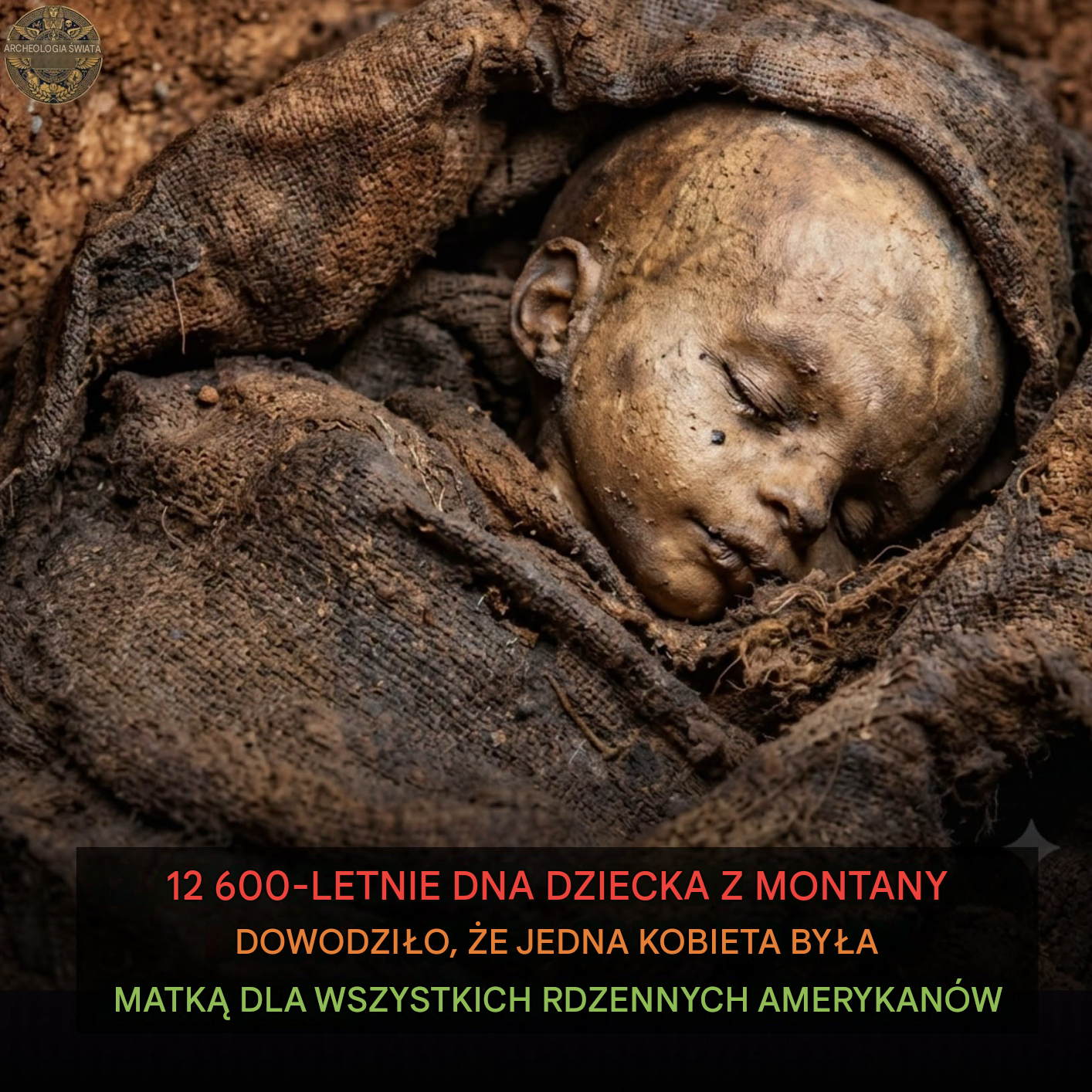
Anzick-1’s genome proved the exact opposite. There was no mysterious vanished race. The child buried in Montana 12,600 years ago belonged to the very same founding population that gave rise to contemporary Indigenous peoples across the Western Hemisphere.
Even more remarkably, the genetic comparisons revealed a deep branching event that happened early in the peopling of the Americas. Shortly after the ancestral population entered North America south of the massive continental ice sheets, it split into at least two major branches:
1. Northern Native Americans (NNA): Ancestral to many modern Indigenous groups in Canada and the northern United States (such as Algonquian, Na-Dene, and Salishan-speaking peoples).
2. Southern Native Americans (SNA): Ancestral to Indigenous peoples throughout the southern United States, Mexico, Central America, and South America.
Anzick-1 fell squarely on the Southern Native American branch, right near the base of that split. That is why Indigenous peoples living thousands of miles away in Central and South America today are his closest living relatives—a genetic thread stretching uninterrupted from Pleistocene Montana to the tip of Tierra del Fuego.
Part 2: Why "One Woman Mothered All Native Americans" is False
Whenever ancient DNA makes headlines, nuance is usually the first casualty. Shortly after the Anzick-1 study was published—and periodically ever since on social media pages, blogs, and short-form videos—posts began circulating with sensational captions claiming that the Montana boy’s DNA proved every Native American descends from "one single woman" or a "lone ancestral mother."
This claim stems from a fundamental misunderstanding of how human genetics works, conflating two completely different concepts: a founding population and a single individual, as well as confusing mitochondrial DNA lineages with an entire person's ancestry.
Please click on the next page to continue reading 👇