What About the Fathers?
The exact same principle applies to the paternal side. Just as mtDNA traces strictly maternal lines, the Y-chromosome is passed strictly from father to son. Ancient and modern DNA studies show that Indigenous men across the Americas carry founding paternal lineages belonging primarily to Y-chromosome haplogroup Q (specifically sub-lineages Q-M3 and Q-L54, along with smaller contributions from haplogroup C-P39). Anzick-1 himself carried a paternal lineage belonging to haplogroup Q-L54, confirming that multiple founding fathers—not a single patriarch—also formed the ancestral population.
Why People Confuse "Mitochondrial Eve" with Founding Populations
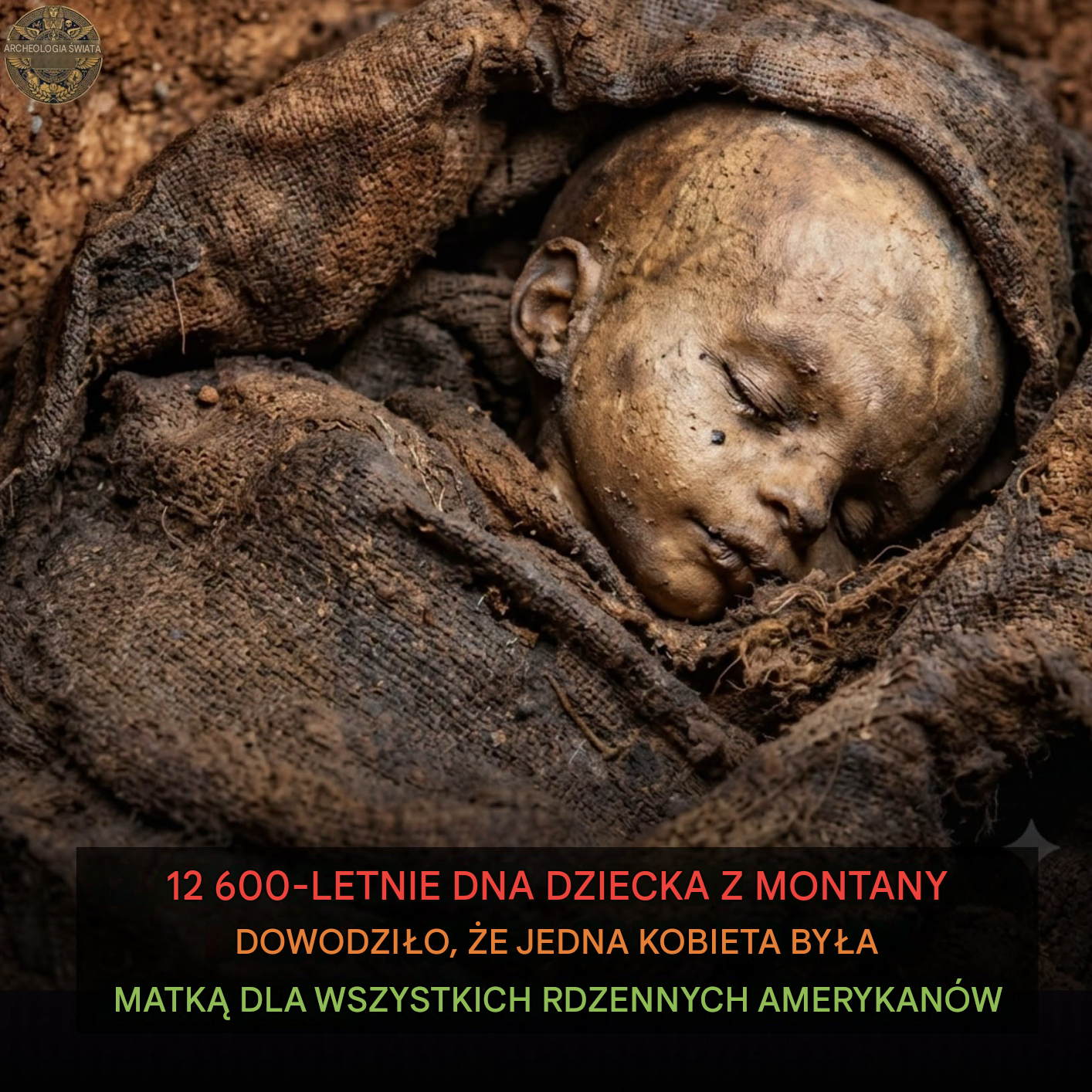
The viral "one woman" myth is almost certainly a garbled mashup of Anzick-1’s discovery and the popular science concept of "Mitochondrial Eve."
In genetics, "Mitochondrial Eve" is the name given to the most recent common matrilineal ancestor of all living humans on Earth today—a woman who lived in Africa roughly 150,000 to 200,000 years ago. Crucially, Mitochondrial Eve was not the only woman alive at the time, nor was she the sole ancestor of humanity. Thousands of other women lived alongside her and passed their nuclear DNA down to modern humans; her specific mitochondrial line simply happened to survive through unbroken chains of daughters while the purely maternal lines of her contemporaries eventually died out when a generation had only sons.
When non-scientists hear phrases like "one shared founding lineage" or "common maternal ancestor," it is easy to misinterpret that as "one woman gave birth to an entire continent's population." In reality, Anzick-1’s genome proves unity of origin at the population level—not descent from a single Eve.
Part 3: The Accidental Discovery in the Shields River Valley
To fully appreciate the significance of Anzick-1, it helps to step back from the laboratory and look at how his burial was discovered—a story that began entirely by accident in the spring of 1968.
Near the small town of Wilsall, in southwestern Montana’s Shields River Valley, two construction workers—Ben Hargis and Calvin Sarver—were using a front-end loader to dig gravel and dirt out of the base of a sandstone cliff on land owned by the Anzick family. As the heavy machinery scraped away talus and sediment at the foot of the bluff, the bucket uncovered something extraordinary: hundreds of finely chipped stone tools and beveled antler rods, all stained a vivid, rusty crimson.
The workers recognized immediately that they had stumbled upon something ancient. Underneath the cache of tools, they found the fragile, red-stained bones of a young child.
Word of the find quickly reached archaeologists in Montana, who arrived to examine the site. Unfortunately, because the discovery was made during construction work rather than a controlled excavation, the exact stratigraphic layers of the burial had already been disturbed. Even so, the artifacts themselves told an unmistakable story.
Among the more than 100 artifacts recovered from the site were:
• Clovis projectile points: Iconic, leaf-shaped spear points made from high-grade agate, chert, and chalcedony, featuring distinctive concave bases and long vertical grooves ("flutes") chipped out of both sides so they could be hafted securely onto wooden shafts.
• Bifaces and knives: Large, teardrop-shaped stone cutting tools at various stages of manufacture, demonstrating extraordinary flintknapping skill.
• Bone or antler foreshafts: Long, cylindrical rods carved from elk or mammoth bone/antler with beveled ends, likely used as interchangeable spear tips or sockets connecting stone points to main wooden shafts.
• Red ochre: Almost every single stone tool, antler rod, and bone fragment was coated in powdered hematite—red ochre—a mineral pigment used in ritual burials across the prehistoric world from Europe to Australia to the Americas.
For decades, the Anzick site remained unique in North American archaeology. While thousands of Clovis points had been found scattered across fields, riverbeds, and mammoth kill sites from Washington to Nova Scotia, Anzick-1 was—and remains—the only confirmed Clovis human burial ever discovered.
Please click on the next page to continue reading 👇