The June 2014 Reburial
In June 2014—four months after the genome was published in Nature—a historic ceremony took place in the Shields River Valley near Wilsall, Montana, not far from the sandstone cliff where the boy had been laid to rest 12,600 years earlier.
Led by Crow Nation traditional leaders and joined by representatives from several other Montana tribes, Sarah Anzick, and Eske Willerslev, Anzick-1’s remains were respectfully reinterred in a private ceremony. Prayers were offered, cedar smoke was burned, and the ancient child was finally returned to the soil of his homeland.
Eske Willerslev later reflected that participating in the reburial was one of the most moving experiences of his career, fundamentally changing how he approached ancient DNA research worldwide. The Anzick-1 project became a blueprint for ethical paleogenomics—demonstrating that cutting-edge science and deep respect for Indigenous sovereignty and spiritual traditions are not enemies, but partners.
Part 7: Why Scientific Precision Matters
The story of Anzick-1 is a reminder of why precision matters when we talk about human history.
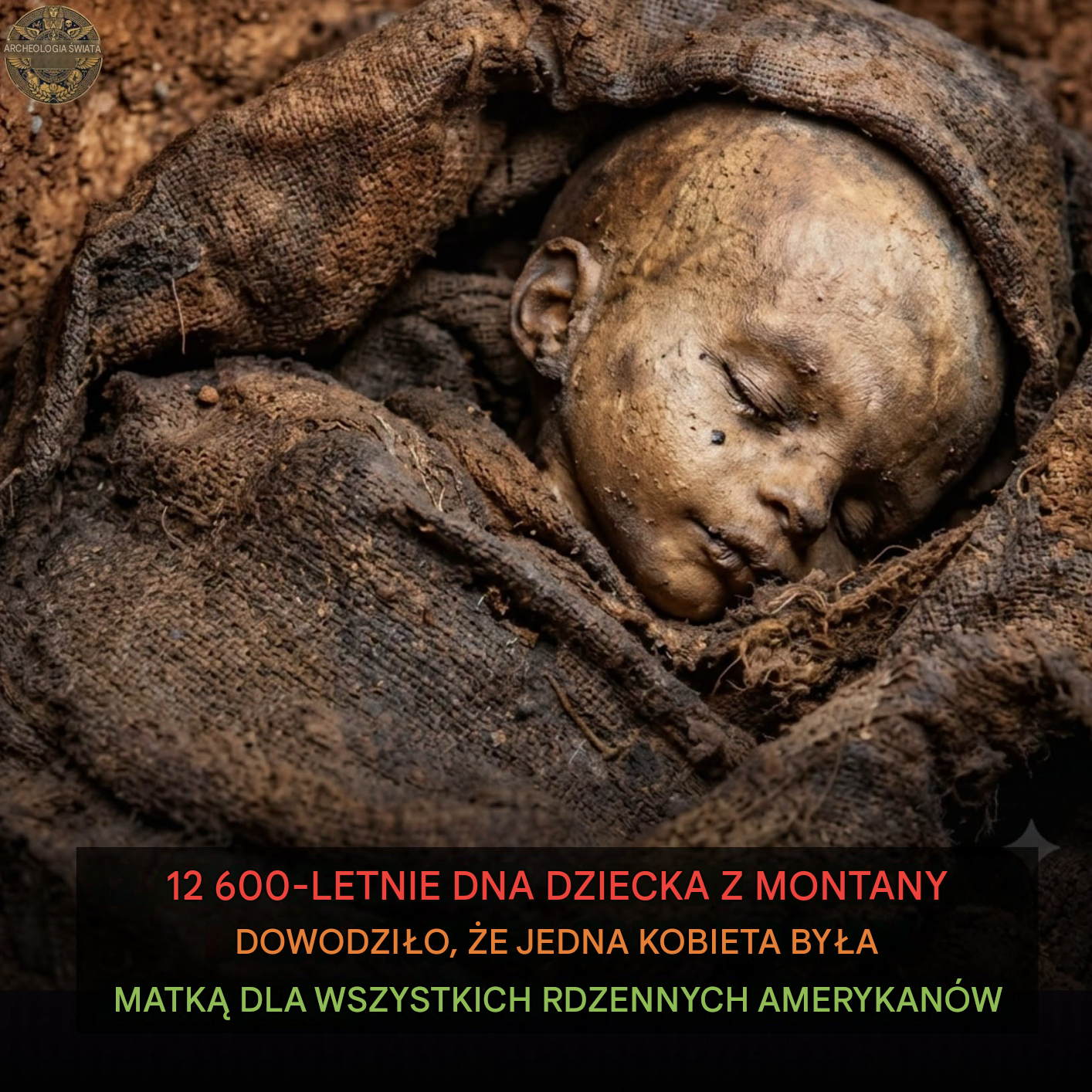
When viral social media posts reduce 12,600 years of population genetics into a clickbait line like "Scientists prove one woman mothered all Native Americans," they don't just get the biology wrong—they flatten a rich, complex human epic into a cartoon.
Here is what the evidence actually tells us, distilled into clear facts:
1. No single woman or lone family populated the Americas. The ancestors of Native Americans crossed Beringia as a resilient founding population of hundreds to thousands of men, women, and children who had adapted to the harsh Ice Age environment of the far north for millennia.
2. Multiple maternal and paternal lineages survived. While Anzick-1 carried the rare coastal maternal lineage D4h3a, modern Native Americans descend from at least five major founding maternal haplogroups (A2, B2, C1, D1, and X2a) plus rarer founding branches, alongside multiple founding paternal lineages (haplogroup Q). Many ancestral mothers and fathers built the Indigenous populations of the Western Hemisphere.
3. Anzick-1 proves shared kinship across two continents. The toddler buried in Montana 12,600 years ago was not a European migrant, nor did he belong to an extinct, mysterious race. He was a direct representative of the founding population ancestral to nearly all living Native Americans from Alaska to Patagonia—and the closest ancient relative yet found to Indigenous peoples across Central and South America.
Buried with care, ochre, and more than a hundred masterfully crafted tools by a grieving Ice Age community, Anzick-1 slept beneath the Montana earth for over twelve millennia. When modern science finally read his genetic story—and then respectfully returned him to the ground—he gave humanity one of its clearest windows yet into the courage, adaptability, and shared ancestry of the first peoples of the Americas.